Fátima Bosch Fernández Crowned Miss Universe 2025 Amid Rigging Allegations and Public Outcry
 Nov, 22 2025
When Fátima Bosch Fernández stepped onto the stage in Pak Kret, Nonthaburi, Thailand on November 21, 2025, she didn’t just become Miss Universe—she became the center of a storm that threatened to unravel one of the world’s most iconic beauty pageants. The 25-year-old Mexican model, representing Tabasco, was crowned the 74th Miss Universe, making her the fourth Mexican woman to win the title after Lupita Jones, Ximena Navarrete, and Andrea Meza. But her victory wasn’t met with cheers alone. Within hours, allegations of rigging, public humiliation, and backstage corruption erupted across global media, turning a celebration into a scandal.
Public Humiliation Before the Crown
The controversy didn’t begin on stage. It started on November 4, 2025, during a routine sash ceremony at the same venue. Nawat Itsaragrisil, the national director of Miss Universe Thailand, publicly berated Bosch in front of cameras and contestants. "You’re dumb," he reportedly said, accusing her of failing to post promotional content on social media. When Bosch defended herself, he called security. Several contestants walked out in protest. Victoria Kjær Theilvig, the outgoing Miss Universe 2024, left the venue entirely, later telling reporters: "If they treat a finalist like this, what happens to the ones who don’t win?" Bosch, visibly shaken, told CBS News: "I felt disrespected—not just as a contestant, but as a person." Itsaragrisil issued a public apology two days later, but the damage was done. The incident became a viral moment, with hashtags like #JusticeForFatima trending in 17 countries.Allegations of a Fixed Outcome
Then came the bombshell. Hours after Bosch was crowned, Omar Harfouch, a Lebanese-French composer and one of the pageant’s judges, resigned in a scathing statement. He claimed that Raúl Rocha, owner of the Miss Universe Organisation, had pressured him to vote for Bosch. "They said to me, ‘We need her to win because it will be good for our business,’" Harfouch alleged in a statement released by his legal team. He added that a "secret committee" had pre-selected the top 30 finalists before preliminary rounds even began—and that a "significant conflict of interest" involved an alleged romantic relationship between a contestant and a committee member. Harfouch didn’t stop there. He promised to release "all details" in May 2026 on HBO. "This isn’t just about one woman," he said. "It’s about the integrity of a global institution that claims to empower women while operating like a family business." The Miss Universe Organisation responded swiftly. In a statement issued from its New York City headquarters, it denied any pre-selection, insisted evaluations followed "transparent protocols," and banned Harfouch from using its trademarks. "We do not tolerate unsubstantiated claims," the statement read. But the damage to credibility was already done.
Why This Matters Beyond the Crown
Beauty pageants have long walked a tightrope between tradition and modernity. For decades, Miss Universe was seen as a platform for female empowerment—until it wasn’t. The 2025 edition exposed the cracks. Bosch’s own answer in the final Q&A—"Women must speak out, believe in their worth, and not allow anyone to question their value"—felt like an unintentional indictment. She didn’t just win a crown; she inherited a crisis. Experts say this is the most serious scandal since the 2015 incident where the title was stripped from Miss Colombia for a leaked video. "This isn’t just about one judge or one director," said Dr. Elena Morales, a cultural studies professor at the University of Mexico City. "It’s about a system that’s been insulated for too long. When the owner’s son is whispering in a judge’s ear about business deals, and the public is told it’s all about talent—you’re not running a pageant. You’re running a PR campaign with glitter." The fact that Bosch was crowned despite the backlash speaks volumes. Some argue it proves she’s genuinely deserving—"She won even with the cloud," said one contestant on condition of anonymity. Others say it confirms the system’s corruption: "They didn’t need to fix the vote. They just needed to make sure she didn’t look like a victim."What Comes Next?
The Miss Universe Organisation has pledged to conduct an internal review, but no timeline has been given. Meanwhile, HBO is reportedly developing a documentary based on Harfouch’s claims, set for a May 2026 release. Legal teams in Thailand, the U.S., and France are said to be gathering evidence. Several contestants have reportedly contacted human rights organizations, seeking protection from retaliation. Bosch, for her part, has stayed largely silent since the crowning. But in a brief interview with Hola.com, she said: "I want to be remembered as someone who changed the prototype of Miss Universe." Whether that means reforming the system—or simply surviving it—remains to be seen.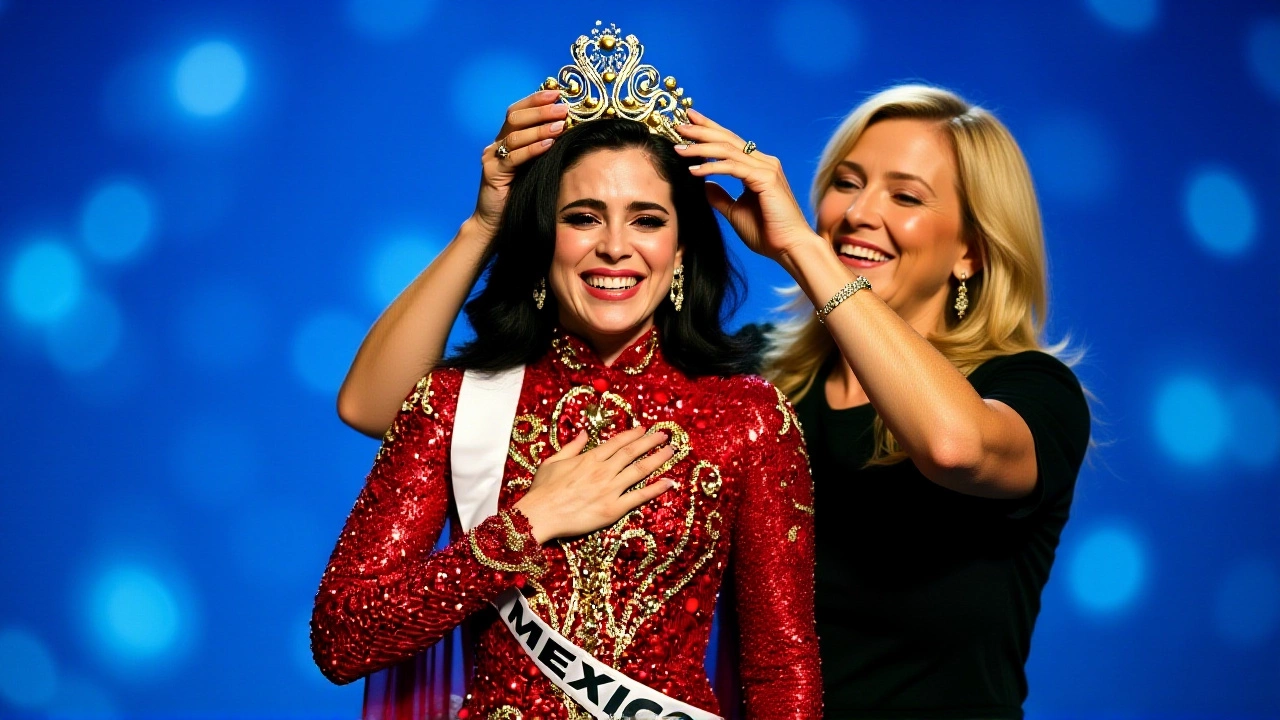
Background: Mexico’s Pageant Legacy
Mexico has a storied history in Miss Universe, with wins in 1991, 2010, and 2021. Bosch’s victory extends that legacy, but it also puts a spotlight on the country’s complex relationship with beauty standards. Tabasco, her home state, is one of Mexico’s poorest regions. Her win, while celebrated by many, also raised questions: Was she chosen because she represented resilience—or because her father’s business ties made her politically convenient? The pageant’s global audience—estimated at over 1.2 billion viewers—won’t forget this year. And for the first time in decades, the question isn’t who won. It’s whether the crown was ever truly hers to wear.Frequently Asked Questions
How did Fátima Bosch Fernández respond to the controversy after winning?
Bosch has largely remained quiet publicly, but in interviews with CBS News and Hola.com, she expressed feeling "disrespected" by Nawat Itsaragrisil’s public reprimand and emphasized her desire to "change the prototype of Miss Universe." She did not directly address the rigging allegations, focusing instead on her platform to empower women, which many see as a strategic pivot away from the scandal.
What evidence does Omar Harfouch claim to have for his allegations?
Harfouch has not released evidence publicly yet, but he claims audio recordings, internal communications, and witness testimonies will be presented in an HBO documentary scheduled for May 2026. He specifically mentioned being pressured in Dubai by Raúl Rocha and his son, and referenced a "secret committee" that pre-selected finalists—allegations that, if proven, would violate Miss Universe’s own rules.
Why did so many contestants walk out during the sash ceremony?
Contestants walked out in solidarity after Nawat Itsaragrisil publicly called Bosch "dumb" and summoned security when she defended herself. Multiple sources confirmed that the behavior was seen as abusive and unprofessional, especially toward a finalist. Several contestants later told reporters they feared similar treatment and felt the organization prioritized compliance over dignity.
Has the Miss Universe Organisation faced similar scandals before?
Yes. In 2015, Miss Colombia’s title was stripped after a leaked video surfaced, and in 2012, the pageant faced backlash over racial bias in judging. But this is the first time a judge has publicly accused the owner of rigging the outcome for business reasons—with promises of HBO evidence. The 2025 scandal is uniquely tied to corporate corruption, not just cultural bias.
What role does Raúl Rocha play in the Miss Universe Organisation?
Raúl Rocha is the owner and CEO of the Miss Universe Organisation, headquartered in New York City. He purchased the brand in 2015 and has since overseen its global expansion. Critics argue he’s turned the pageant into a branding venture, with ties to sponsors and influencers. His son, who reportedly spoke to Harfouch in Dubai, has no official title but is known to be involved in strategic decisions.
What impact could this have on future beauty pageants?
If Harfouch’s claims are verified, it could trigger a global reevaluation of how beauty pageants are judged and governed. Competitors may demand independent oversight, live scoring, or blockchain-based voting. Sponsors might pull out, and younger contestants could boycott the system entirely. The 2026 pageant, already scheduled for Miami, could become a turning point—or the last of its kind.